Project Lifecycle
How a geothermal project comes together.
From initial prospect screening to closing docket assembly, land work proceeds in coordination with engineering and regulatory milestones.
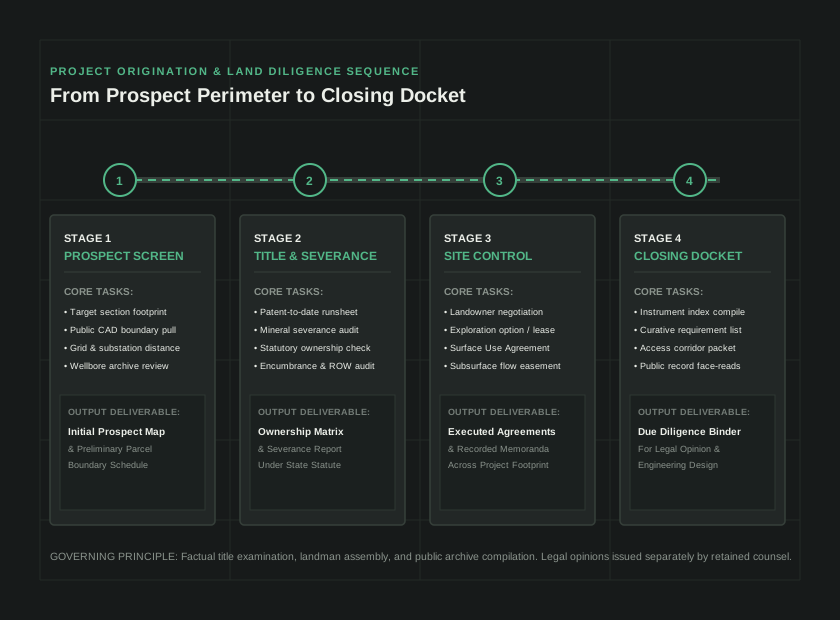
Stage 1: Prospect area screening and boundary definition
Every deep hot rock project begins with geological criteria, but project viability depends on real estate constraints on the surface:
- Footprint Evaluation: Mapping target subsurface fracture envelopes against surface parcel ownership boundaries.
- Infrastructure Corridors: Assessing proximity to electric utility substations, high-voltage transmission lines (69 kV to 345 kV), and paved transportation corridors capable of handling drilling rig loads.
- Wellbore Archive Screening: Pulling historical regulatory dockets from state oil and gas databases to identify existing wellbores, historical drilling depths, casing records, and potential plugging obligations.
Stage 2: Title audit and mineral severance determination
Before negotiating leases or spending drilling capital, developers must know who holds the legal authority to grant geothermal exploration and circulation rights:
- Chain of Title Construction: Building a complete runsheet from the state patent to the present day in the county clerk records.
- Severance Examination: Reviewing every conveyance clause to establish whether minerals have been severed from the surface, and if geothermal rights were specifically addressed or reserved.
- Statutory Alignment: Applying state-specific statutory standards. In Texas, Texas Natural Resources Code Section 141.004(a) confirms that geothermal energy belongs to the surface owner when severed, unless expressly reserved. In New Mexico, high-temperature resources (>250 degrees F) fall under Energy Conservation and Management Division (ECMD) rules. On federal lands, the BLM conducts competitive leasing under 43 CFR Part 3200.
Stage 3: Landowner engagement and site control execution
With ownership established, landmen approach surface and mineral owners with clear, equitable proposals:
- Exploration Agreements & Options: Providing developers exclusive rights to perform seismic, geophysical, or temperature gradient surveys during a preliminary scoping window.
- Surface Leases: Long-term commercial leases covering the 5-acre to 15-acre central drilling and binary power facility pad.
- Subsurface Flow Easements: Securing rights to circulate working fluids through target rock formations across multiple adjoining tracts.
- Surface Use Agreements (SUA): Protecting landowner water wells, establishing road maintenance responsibilities, specifying fencing standards, and fixing setback buffers (typically 1000 feet from residences or active water sources).
Stage 4: Due diligence docket and exhibit packet assembly
The culmination of land diligence is the closing docket delivered to developer management, title counsel, and project lenders:
- Recorded Instrument Packet: Full face-read copies of all deeds, leases, easements, and memoranda with county recording stamps.
- Ownership Matrix: Tabular breakdown showing surface ownership percentages, mineral ownership, and status of site control.
- Curative Requirement List: Identifying missing probates, unreleased mortgages, or unrecorded rights-of-way requiring curative action prior to financial closing.
- Regulatory Exhibit Schedule: Preparing certified legal descriptions and tract maps for state commission drilling permit filings (such as Texas Railroad Commission Form W-1).
Parallel technical diligence
While the land team secures site control and builds the title docket, developer engineering teams conduct reservoir modeling, environmental impact evaluations, and interconnect interconnection queue requests. Both tracks must converge before commercial financing can close.